

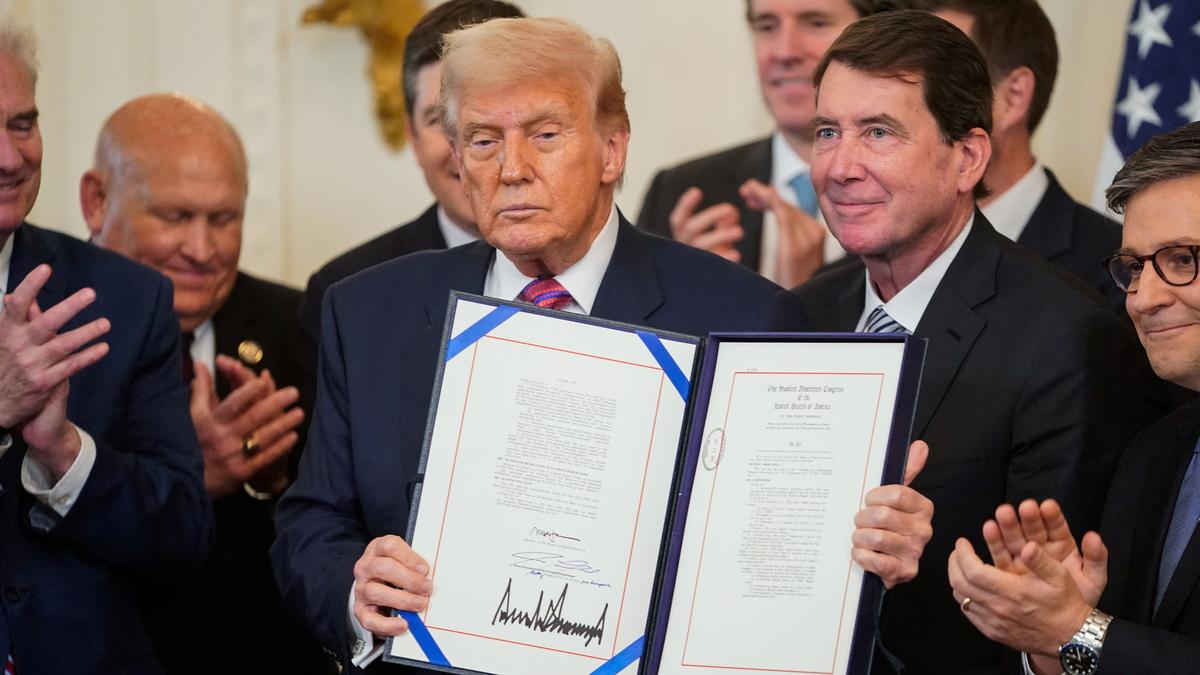
For years, the crypto industry has ridden the uncertain waves, torn between innovation and regulation. That equilibrium changed profoundly this week when former U.S. President Donald Trump signed into law a historic piece of legislation meant to create a clear legal framework for stablecoins. The move has attracted a torrent of responses in financial markets, tech communities, and political arenas, as many view it as a milestone in the quest towards mass adoption of virtual assets.
Why Stablecoins Matter in the Crypto Landscape
Stablecoins hold a special place among digital assets. They are not like Bitcoin or Ethereum, which change value every day. Stablecoins are constructed to retain a stable value by linking them to underlying assets like the U.S. dollar, gold, or a portfolio of currencies. This stability makes them an attractive alternative between traditional finance and blockchain-based systems. They have already gained traction for payments, cross-border transactions, and DeFi operations.
Thus far, though, their legal status in the United States has remained ambiguous. While issuers such as Tether and Circle have released popular stablecoins, regulators have tended to query their reserves, governance, and role in financial stability. Trump’s new law aims to assuage those fears by creating regulations that control issuance, auditing, and supervision.
The Core of the Legislation
The stablecoin bill, after months of controversy and negotiation, enacts three core mandates:
Reserve Transparency: Issuers are required to keep auditable reserves of equal or greater value than the outstanding coins. Independent audits will be enforced, and non-compliance may subject them to severe penalties.
Licensing and Regulation: Stablecoin issuers will be required to seek a federal license, subjecting them to standards akin to banks and payment processors. This action counteracts long-standing concerns that unstable tokens might induce systemic risk.
Consumer Safeguards: The law provides mechanisms to ensure that users have the ability to redeem coins in fiat currency at par value, providing comfort to retail and institutional players alike.
These measures are meant to reinforce confidence, an element usually lacking in the turbulent crypto environment, and introduce stability into an industry that has long been conducting its business in regulatory limbo.
Trump’s Political Calculus
Trump’s move to support the legislation has not been a spur-of-the-moment thing. He had been wary of the cryptocurrencies during his previous political campaigns, even describing them as a danger to the U.S. dollar. The tone has since changed as crypto gained popularity among voters and mainstream financial institutions as well.
By endorsing the stablecoin bill, Trump indicates promotion of innovation while making America a global leader in defining the future of digital finance. Analysts believe that this step can also resonate with young voters, business founders, and investors who recognize blockchain as an essential force driving the economy of the next decade.
Industry Response
The cryptocurrency business has embraced the legislation in the main, viewing it as a go-ahead sign to expand operations. Firms such as Coinbase and Circle responded with statements soon after, commending the legislation for bringing clarity and investor confidence.
Venture capitalists, who have invested billions in blockchain startups, see this as likely to stimulate another wave of investment. By alleviating uncertainty, the law brings down the threshold for traditional financial institutions—banks, hedge funds, and payment companies—to join the stablecoin business.
Conversely, critics caution that increased regulation would put power in the hands of a few giant players, suppressing smaller innovators who are not in a position to pay for compliance costs. The equilibrium among promoting innovation and guaranteeing safety will probably be put to test over the next few years.
Path to Mainstream Adoption
Stablecoins are already being utilized across the world for international trade and remittances, especially in nations that have volatile currencies. In light of this new legislation, U.S.-based stablecoins can now gain greater acceptance from retailers, businesses, and fintech platforms.
Consider a California small business accepting payments in a regulated, dollar-backed stablecoin—transactions could be faster, cheaper, and less reliant on legacy banking systems. Similarly, cross-border workers remitting money back to their native countries might find stablecoins to be more reliable than wire transfers, which can be slow and expensive.
Widespread adoption is not inevitable, but by demystifying the rules, the law provides opportunities for experimentation and scaling that were before held back by legal uncertainty.
Global Ripple Effects
The United States’ action will likely affect cross-border regulation policy elsewhere. Europe and Asia have been working on their own digital currency regulations, and Trump’s stablecoin legislation could establish a precedent for global cooperation. International institutions such as the International Monetary Fund (IMF) might also have a say in developing standards that enable stablecoins to flow freely between borders.
What Comes Next
Though the law is a benchmark, much remains to be done. Implementation will call for close cooperation between regulators, technology companies, and banks. Mechanisms of oversight need to be tried out, and issuers will have to reshuffle their business models rapidly to comply.
Nevertheless, the time has come: the debate over crypto has changed from whether it needs to happen to how it can be safely incorporated into our lives.
Trump’s signing of the stablecoin bill is not just a policy victory; it’s a sign that digital assets are no longer on the periphery of finance. With more established rules and more institutional backing, stablecoins could be the catalyst that brings cryptocurrency from speculation to mainstream use.
The future of money, it appears, is no longer purely digital—it is more stable, more regulated, and more mainstream.
Disclaimer: The above press release has been provided by a third party. We do not verify or endorse the content and will not be responsible for any inaccuracies, claims, or damages arising from the same.